The missing client bureau for businesses that do the work first.
Client Bureau brings client checks, moderated public profiles, contracts, evidence, payment recovery, lien-service workflow, and mobile tools into one serious operating system.
Platform doctrine
Search, document, protect.
Every workflow helps a contractor or service business make a cleaner decision before risk becomes expensive.
How business owners use it
One workflow from lead review to payment documentation.
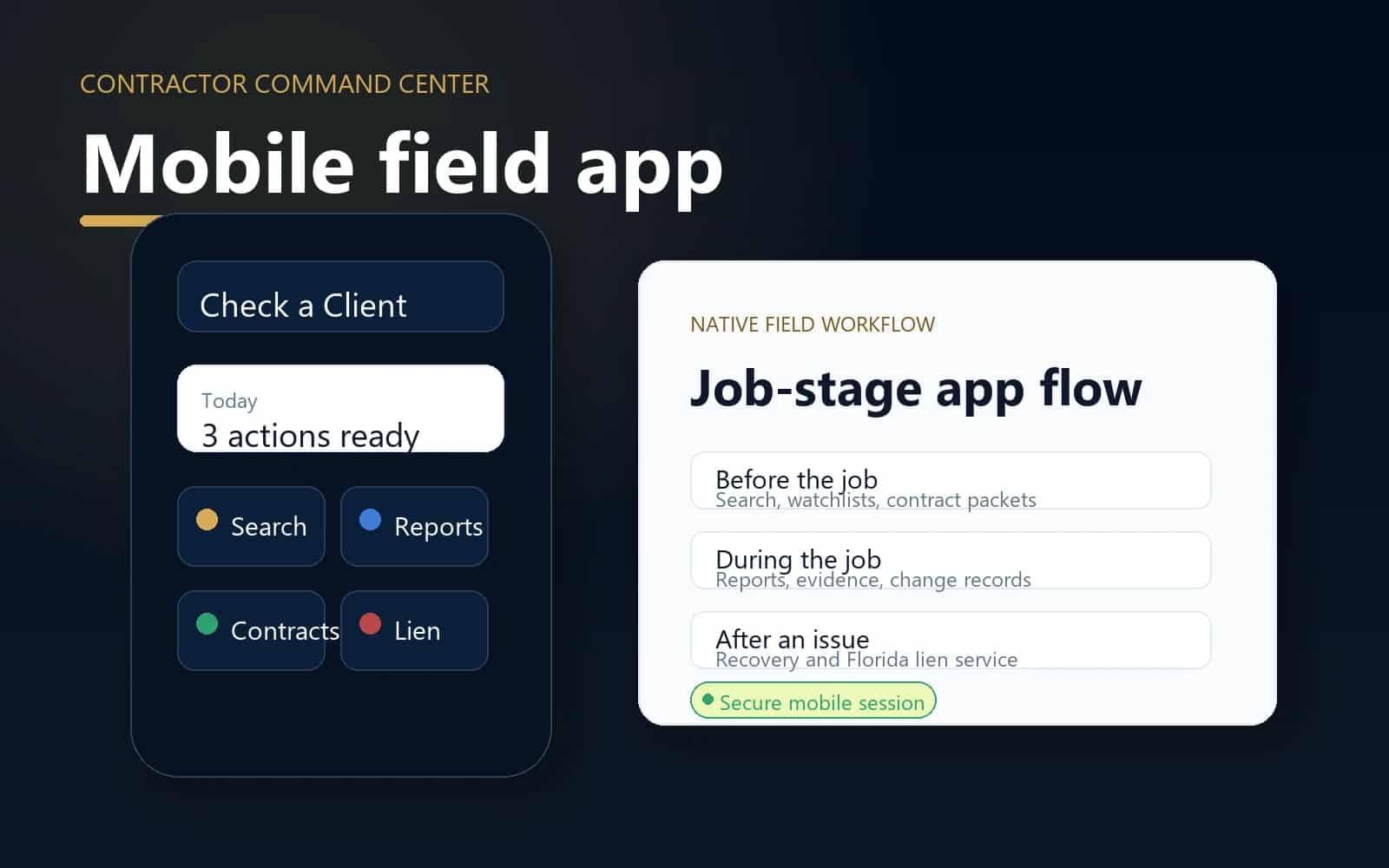
The platform is organized by the same order contractors live through: before the job, during the job, and after an issue.
Check the client
Check before you take the job. Review approved public context, private-match guidance, positive signals, disputes, and response status.
Set the terms
Create a contract packet, define scope, document payment terms, and send a signing link before scheduling or buying materials.
Document the job
Store private evidence, reports, project context, change orders, and completion records while the work is still fresh.
Watch and monitor
Save searches and watch profiles so changes, public updates, and response context do not get missed before the next job.
Recover or escalate
If payment stalls, open a private recovery case or Florida lien-service workflow with records, status, and audit-ready next actions.
Trust and fairness
Serious enough for public records. Careful enough for real disputes.
Client Bureau should feel authoritative without becoming inflammatory. Public pages use cautious language, right-of-response paths, and private-data rules.
Contractors and service businesses
Use Client Bureau before accepting jobs, assigning crew time, ordering materials, or extending payment trust.
Subcontractors and trade partners
Document experiences with contractors, project operators, payment chains, retainage context, and trade-specific records.
Clients with a response or correction
Submit a response, dispute, correction request, or resolution update through moderated fairness workflows.
Client Bureau
Check the client before the job gets expensive.
Check public context, preserve private records, and use the right workflow before the next project creates avoidable risk.